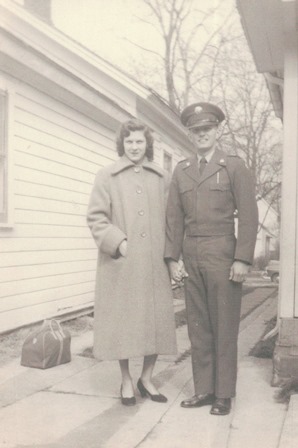
Ruth Houser (Wife of Richard)
Bio
Ruth Houser was the devoted wife of Richard Houser, a Korean War veteran who served in the United States Army from 1953 to 1954. Shortly after their marriage, she faced the challenge of returning to her parents’ home while Richard underwent basic training and served overseas. Despite the difficulties of living with her squabbling siblings, Ruth remained supportive and eagerly awaited Richard’s safe return. Together, they celebrated more than 60 years of marriage. Ruth emphasized the importance of educating today’s youth about the Korean War, sharing moments from Richard’s service and their transition to life after the war.
Video Clips
Life After War
Richard and Ruth Houser discuss life after Richard returned from his service in Korea. They recognize that Richard's transition home required time and adjustment.
Share YouTube:
https://www.youtube.com/watch?v=9Sd6AK0QDqw&start=248&end=290
Share from this page:
https://koreanwarlegacy.org/interviews/richard-houser-wife#clip-1
Embed:
Why This Project is Important
Ruth Houser reflects on the significance of her husband's interview for the Korean War Legacy Foundation. She emphasizes the importance of today's youth learning about the Korean War.
Share YouTube:
https://www.youtube.com/watch?v=9Sd6AK0QDqw&start=316&end=365
Share from this page:
https://koreanwarlegacy.org/interviews/richard-houser-wife#clip-2
Embed:
Building a Future After War
Richard mentions that he sent all of his military wages to his wife, Ruth, while he was serving in the Korean War. Mr. and Mrs. Houser explain that the money was used to purchase a home.
Share YouTube:
https://www.youtube.com/watch?v=9Sd6AK0QDqw&start=367&end=400
Share from this page:
https://koreanwarlegacy.org/interviews/richard-houser-wife#clip-3
Embed:
Video Transcript
[Beginning of Recorded Material]
Interviewer: Okay, well, thank you for taking the time to sit with us. We appreciate it. So, you are the wife of Mr. Houser.
Ruth Houser: Yes.
Interviewer: And he told me that two were married about a month?
Richard Houser: Year.
Interviewer: Oh, a year before he shipped out to Korea. What was it like when you found out he was going to be leaving?
Ruth Houser: Kind of scary.
[00:00:30]
Interviewer: So, you didn’t know what was going to happen to him; I guess. But he came home for you.
Ruth Houser: Yes, he did.
Richard Houser: Late.
Ruth Houser: Late, but he did come home.
Interviewer: Yeah, so it was probably in his mind the whole time. He said, I’m going to get through this so I can come home to my wife. And he discussed some of the letters that you exchanged. Was that a good way to keep in touch throughout the war while he was there?
[00:01:00]
Ruth Houser: The best way, yes, so I know.
Richard Houser: It was the only way. They did have a system at one time; you could make a call. But it was so expensive, and it took so long, they wouldn’t give you the time to go and make a phone call.
Interviewer: So, how was it…What was it like being apart from him during the time that he was
[00:01:30]
in Korea?
Ruth Houser: It was kind of hard not knowing what to do. Trying to keep busy…
Interviewer: Yeah.
Ruth Houser: …with working.
Interviewer: Did you have support from family and friends?
Ruth Houser: Yes, I moved back in with my parents when he was drafted. And a few friends that we
[00:02:00]
did things together to keep busy.
Interviewer: Uh-huh. What was the coverage of the war while during, you know, while he was in Korea? I guess Mr. Houser spoke to the fact that not many people talked about it. The media didn’t cover it very much. Was that kind of your experience as well? That no one really discussed it.
Ruth Houser: They seem to want to forget.
[00:02:30]
Uh, wish it wasn’t really so.
Richard Houser: Dad used to follow… my dad used to follow me.
Ruth Houser: Oh, your father?
Richard Houser: Yeah.
Ruth Houser: Well, your mother kept track of it, too. She was afraid when the plane…
Richard Houser: When the plane crashed.
Ruth Houser: …crashed.
Richard Houser: Thought I was on it.
[00:03:00]
Interviewer: A plane of soldiers?
Richard Houser: Yeah. Plane load crashed. They started calling Red Cross and everything.
Interviewer: That must have been a relief, yeah, for him at least.
Richard Houser: I wasn’t on it [laughs]. Thank God.
Interviewer: So, what was it like when he finally came home?
Ruth Houser: It was exciting.
Interviewer: Yeah?
[00:03:30]
Ruth Houser: Except, but he didn’t come right home. He got uh…
Interviewer: You’ll never let him get past that.
Richard Houser: I’ll never get out of that one [laughs].
Ruth Houser: That you were home safe and sound, though, was all that really mattered.
Interviewer: Yes. You guys were reunited. You had a happy life.
Ruth Houser: Yes.
Richard Houser: Yep.
Interviewer: So…
Ruth Houser: So, 60 years.
Interviewer: Yeah, well, congratulations. That’s amazing.
Richard Houser: This, this July.
[00:04:00]
Interviewer: That’s great. Well, I hope there’s a big celebration.
Richard Houser: We’ll see [laughs].
Interviewer: So, what was it like when he came back? Maybe the difference in your relationship or with family and friends. Was it kind of back to normal, or?
Ruth Houser: Gradually.
Richard Houser: Yeah, it took a long time.
Ruth Houser: So many things to think about.
Richard Houser: Yeah, mhm.
Interviewer: Because of the time apart from each other, or maybe?
[00:04:30]
Richard Houser: Yeah. You’re just getting back to making your life again, you know. You live in a regimented life. You get back, and you can do what you want to do, so.
Interviewer: Mhm. Well, she could have given you orders.
Richard Houser: Yeah, yeah, yeah.
Ruth Houser: I tried [laughs].
Interviewer: Uh, what was the biggest impact of the war? Just being apart from him, or?
Ruth Houser: Yeah,
[00:05:00]
I think so. It’s hard to go back home–fight with your sisters and brothers [laughs].
Interviewer: All right, so I guess the last question that I have, you know, I asked your husband what this whole project means to him, and he explained that it’s important that people understand and are educated more about the Korean War in general. For students to actually learn about it.
[00:05:30]
How do you feel about him participating in the project and us doing this project in general?
Ruth Houser: Well, I think it’s good that the young people today understand. That you talk to them about Korea…who what? What’s Korea? Try to explain it to them, what happened. But, um, I know there’s so many things for them to do today
[00:06:00]
that it kind of goes to the side.
Interviewer: Yeah, yeah. Okay, well, thank you very much. We appreciate you coming here. You didn’t have to come up on stage but you did.
Ruth Houser: [Laughs]
Interviewer: So, we appreciate that.
Richard Houser: One thing she did, she saved all my allotment checks. That went to her. And we bought a house.
Interviewer: Really? Wow!
Richard Houser: Well, she did.
Interviewer: That’s great.
[00:06:30]
Planning for the future.
Ruth Houser: Yeah.
Interviewer: Not many people save these days, so [laughs]. Well, thank you very much.
Ruth Houser: You’re welcome.
Richard Houser: You’re welcome.
[End of Recorded Material]
Photos
Richard and his Wife, Ruth
This is a photograph of Richard Houser and his wife, Ruth, outside of her grandmother's house.