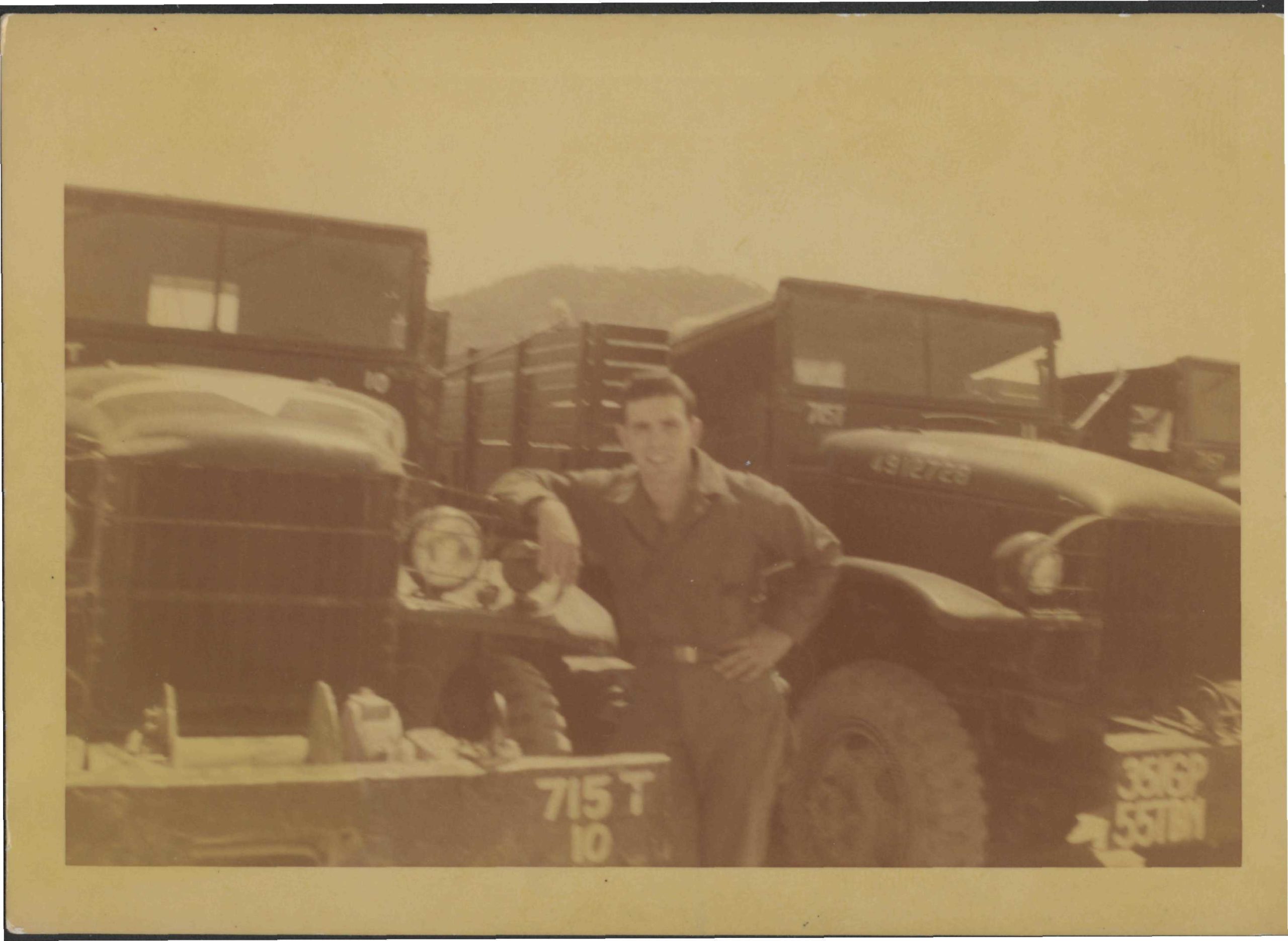
Joseph Calabria
Bio
Joseph Calabria was an active member of the Korean War Veterans Association and served as the commander of the Corporal Allan F. Kivlehan Chapter of the Korean War Veterans of Staten Island. He was drafted into the United States Army at the age of twenty-one and was a part of the 55th Truck Battalion, which was primarily responsible for delivering goods and ammunition to the front lines in Korea. Years later, upon returning to Korea, he observed the rapid growth of buildings, infrastructure development, and the establishment of the Hyundai automobile company. He felt proud knowing his service contributed to a thriving South Korea.
Video Clips
Thoughts on Peace Treaty
Joseph Calabria expresses his desire for the Koreas to reunify. He believes he would sign an agreement if it occurred. He suggests that North Korea should adopt the model of South Korea.
Share YouTube:
https://www.youtube.com/watch?v=_NiP-ToWK7I&start=1006&end=1062
Share from this page:
https://koreanwarlegacy.org/interviews/joseph-calabria#clip-1
Embed:
Returning Home from War
Joseph Calabria describes his experience of returning home from Korea. He explains how it felt like a typical day and draws parallels to what others might have experienced when returning home from Vietnam.
Share YouTube:
https://www.youtube.com/watch?v=_NiP-ToWK7I&start=902&end=935
Share from this page:
https://koreanwarlegacy.org/interviews/joseph-calabria#clip-2
Embed:
Korean War Veterans Group is Formed
Joseph Calabria discusses how veterans of the Korean War are often unrecognized, as this conflict is often referred to as the "forgotten war." He shares how these veterans needed a way to connect with others who understand their experiences. He explains that the Korean War Veterans organization was founded to provide a supportive community for these veterans.
Share YouTube:
https://www.youtube.com/watch?v=_NiP-ToWK7I&start=60&end=118
Share from this page:
https://koreanwarlegacy.org/interviews/joseph-calabria#clip-3
Embed:
Korean Then and Now
Joseph Calabria reflects on his memories of the Korean War and contrasts them with what he observed during a recent visit to Korea. He highlights the significant industrial growth that has occurred in South Korea over the years. He expresses pride in witnessing the transformation of the country from a state of destruction to one characterized by development and infrastructure in such a short period. He notes how the South Korean people are deeply appreciative of the veterans for their sacrifices and contributions to their country.
Share YouTube:
https://www.youtube.com/watch?v=_NiP-ToWK7I&start=220&end=325
Share from this page:
https://koreanwarlegacy.org/interviews/joseph-calabria#clip-4
Embed:
Video Transcript
[Beginning of Recorded Material]
Joseph Calabria: My name is uh.. Joseph Calabria. I am the commander of the Corporal Allan F. Kivlehan Chapter of the Korean War Veterans of Staten Island but also a member of the Korean War Veterans Association. This uh… organization has been in effect since 1990. It was founded by uh… a fella by the name of Ed Greiger who is uh..I believe
[00:00:30]
the latest I heard was in a veterans hospital in Saint Albans. There was a couple of other commanders Richard McNeill and a fellow by the name of James Janes uh…I got elected into the position in 1995. I’ve been a commander since that period of time up to the present and uh…we’ve picked up quite a number of members
[00:01:00]
What happened is that right after the Korean War a lot of the members wanted to join the Veteran of Foreign War and American Legion. Unfortunately they told us, or told them that they wouldn’t recognize them because it was the forgotten war so they say and it uh..it made them feel that they
[00:01:30]
were inferior and since the Korean War Veterans uh…got together, we’ve got a lot of more a lot more members because they related to each other. The other way you had members from the second world war for whatever reason that I can’t explain make the move through discrimination against us Korean conflict forgotten war. In the newspapers the
[00:02:00]
same thing happens. You hear World War II Vietnam. Just recently on July the third there was an article in the Staten Island paper The Staten Island Advance, “Allegiance to America.” Again it mentioned World War II and Vietnam. I got quite annoyed with that and called up the Staten Island Advance
[00:02:30]
the reporter and explain to her don’t you do any research before you write an article she’s says why. I say because you skipped a war. And speaking to the students I mentioned all the casualty figures and everything. After the meeting was over, two teachers approach me who were not aware
[00:03:00]
of what happened In the Korean War. I says well this is the point I’m trying to point out. You as an educator should be aware of these things should be aware that the children should know what this country has gone through and what it has done. I don’t I don’t think there’s any excuse for that. You should be aware of that. Well we apologize for not being aware of it so you know it’s a never ending battle,
[00:03:30]
trying to educate the public to know what’s happened they should also know uh… We told them the Korean people are very very appreciative of what we’ve done for them and for the country. I said we help them get freedom and democracy. They’re close to being one of the powers in the in the world today uh…
[00:04:00]
I say now we have the Hyundai and the Kia. When I was in korea we had to be careful of the honey bucket and papa-son but I..I drove a truck in Korea and uh, looking back I read a story where the Hyundai when they made that car they made it out of fifty five-gallon drums. They cut the drums up and make a body parts.Today it’s a beautiful car. Last year
[00:04:30]
myself, George and uh… two other members went to Korea. Totally totally remarkable. In sixty one years what they’ve done in the country makes you feel proud that what you did what you could help contribute to made this country what it is today. They got high-rises you got a subway you’ve got a highway you got all kinds of bridges and it just really
[00:05:00]
really makes you feel proud of the fact that hey I was here, I’ve helped do what had to be done and the people are very good and as I say we can expect nothing more. Of all the wars that the United States has fought, Korea is the only one message that you give us the credit we’re due. I was twenty one years old when I got drafted into the United States Army
[00:05:30]
and uh…I want to basic training and uh… in the course of basic training they turn around and that they pulled me out it was sixteen weeks basic training round the eighth week we went to what they call a Bivlack where we would live out in a field. Before we went back to camp we had a meeting you want fellas to volunteers for the paratroopers.
[00:06:00]
After the meeting they read off a bunch of names my name was one of them to report back to the orderly room…I had what they call a class c profile. Nobody seemed to know what a class c profile was finally found out I wore glasses at the time and they said that if you happen to be in combat and you lost your glasses
[00:06:30]
you would be incapacitated so you are not in combat. They put me in truck driving school but I don’t know how to drive a truck. I also learned to take care of the furnaces to keep the barracks warm. After eight weeks there I wanted to check in with the finance department to see that my records were straight and that if I went overseas the money would be sent back to
[00:07:00]
my mother who was a widow. They couldn’t find my records. Then I saw this fellow walk by with a whole bunch of records. Say you got this fellows records there Yeah, just let me put it down he’s a he’s a scheduled for overseas. Where is he going? FECOM. FECOM is Far East Command. Okay now Far East Command includes Hawaii and all those places…Japan.
[00:07:30]
So now we turnarounds and say okay you’re going to go home on what they call delayed route so when I got home I told my mother uh… I was going overseas she said where you going, and I said FECOM. She said what does that mean, you going to Korea I said no no. Could be Japan, could be Hawaii I don’t know. When we got there it had been 19 days on a ship
[00:08:00]
sick the whole 19 days going. Coming back, sick the whole 19 days coming back. My contention is that the Korean War was brought on was instigated by the Russians now, I say as an ally you’re not supposed to do this as an ally but it doesn’t seem that the Russians are our ally. They instigated
[00:08:30]
the start of the Korean War. They instigated the North Koreans to invade the South Koreans. Fortunately uh… General MacArthur was able to invade Incheon to cut the supply lines for North Korea. I arrived in Yokohama then they sent us to Camp Drake in Tokyo and we processed there. We had to turn in all our clothing
[00:09:00]
that we brought with us and the issues us fatigue uniform. They put us on the train took us down to the very end of Japan Sasebo. We were there another day or two to get processed and they put us on another Japanese ship and it took us to Pusan.
Interviewer: When was that? When did you arrive?
Joseph Calabria: I got there in April of nineteen fifty two.
[00:09:30]
I there a total of eighteen months in Korea. When I arrived in Korea they took us by train all up north to Chunchon where I was stationed. I was in a trucking company 55th truck battalion seven fifteen trucking company. We supplied troops,
[00:10:00]
ammunition, fuel, and food to the front line. We were a rear echelon uh… operation and we used to go up following the convoy over the mountains and so on so forth. We were very fortunate. When you look back at as seen in a situation that happened in Afghanistan and the mideast
[00:10:30]
where trucks get bombed and hit land mines and so and so forth. Why we say we’re fortunate…the North Koreans didn’t have the kind of airpower. If they had the airpower we would have been sitting ducks because they go upsides the mountains in Korea cut out of the side of the mountains were very steep. We were only able to get two trucks by
[00:11:00]
and uh…and delivered what we had delivered so forth and uh…I had one experience when I was up on a convoy going up the mountain, down the mountain, all of a sudden my steering wheel went around and began spiraling out of my hand what had happened I hit the break and it started going to the side of the mountain. What had happened, the steering rod broke
[00:11:30]
so the convoy passed me by and told me they would said someone up fix the truck which later on I stood there during the night pitch black no lights but I had heard Korean voices. I didn’t know whether they were Korean North Korean or South Korean but you could hear them. It was kind of scary, young fella twenty one years old
[00:12:00]
foreign country seven thousand miles from home what could you say and uh… The area I was in was mostly farmland and small villages and so on so forth. They had told us not to fraternize with the people and we didn’t; that’s why you know when we come back you didn’t learn too much because the people didn’t speak our language
[00:12:30]
and we didn’t speak their language so we did the best we could. Chunchon at the time I got there a lot of buildings were destroyed. Periodically we used to have a fellow by the name of bedcheck charlie used to be a small plane use to fly in uh… in between the mountains used the river as a guideline and would try to get into Chunchon to try and bomb the airfield
[00:13:00]
but fortunately they didn’t. We would have to jump out and go into foxholes stated and stay there for what they called a red alert then later on there would tell us all clear that we go back into our tents. The most dangerous thing is uh… the roads will primitive all dirt roads and just barely enough to get one truck going one way and the other truck going the other way
[00:13:30]
Not to be disrespectful but Korean drivers left a lot to be desired you know the truth you’re know how they drive they just went by each other and I wasn’t going to go to the other side down a hill and uh… that’s the scary part of it is not uh… not being able to uh… go and see
[00:14:00]
the roads that was safe enough to travel on and like I said we had a worry about the honey bucket and the papasan. The papasan used to have the branches carried on his a-frame so you had to be careful you don’t want hit him and the honey bucket was also slow moving and I say when I first got to Seoul it was flat
[00:14:30]
bombed out and uh… when I finally went back last year I was very surprised and very very honored to see what the Korean people did very resourceful people and very hardworking people and it is just a credit to them.
Interviewer: What do you think was the impact of your service upon your life when you came back to the United States?
[00:15:00]
Joseph Calabria: When I first came back to the United States there was no bands. You just blended in with what went on. “Hey, haven’t seen ya in a while.” Oh, I went for the papers and forgot to come back. People didn’t just like the unfortunately this is the Vietnam veterans disgraceful what they did to them what the people in this country did to them
[00:15:30]
they did the same thing. We went to Vietnam for freedom freedom and democracy but it didn’t work out that way because the peace movement here in the United States was terrible. They threw rocks. I met some of my friends that a Vietnam veterans one guy took his uniform and didn’t want to wear it again. They threw rocks at him spit on him wrong totally wrong. You’re an American you’re there to help
[00:16:00]
not to be ridiculed.
Interviewer: Any message or to the young generations about the Korean War veterans you want to pass along?
Joseph Calabria: The message I can tell them is that if you have to go and do something for your country, do it and be proud of what you are doing. Like I say sometimes things work out for you and sometimes they don’t.
[00:16:30]
But the fact of the matter is that if your country needs you you should be available to go and do it. Naturally most of us don’t want to do it but after it’s done you look back and say it wasn’t bad after all.
Interviewer: If there was a petition to replace the armistice with a peace treaty would you be willing to sign that petition?
[00:17:00]
Joseph Calabria: Provided that it shows unification for the Koreas providing that both Koreas get-together and become one then I will be willing to sign it. Not if they stay split I mean uh… the guy up north what can I say about him nothing but the what they should do is look at it realistically and see what the South Korean
[00:17:30]
people have done take it and say well let’s join let’s be part of it. Then I will go along with that but not to be split.
Interviewer: This is from the ministry of patriots and veterans affairs of the Republic of Korea this is the official proclamation for Mr. Joseph Calabria.
Joseph Calabria: Thank you professor. Thank you Danny. Thank you sweetheart.
[00:18:00]
Interviewer: And I hope that Daniel will continue to work with you guys.
[End of Recorded Material]
Photos
Joseph Calabria in Chunchon
Joseph Calabria in Chunchon
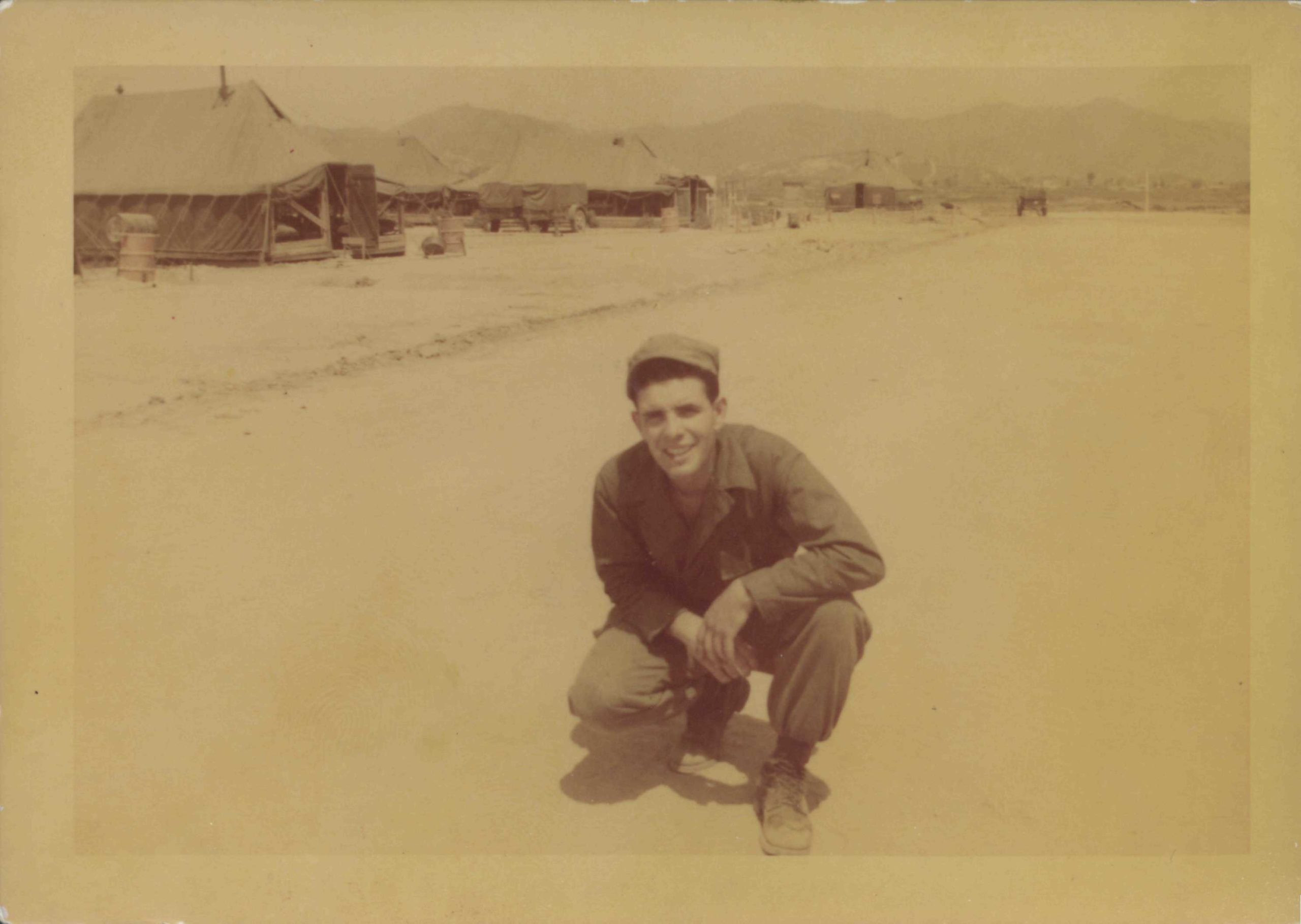
Joseph Calabria in Chunchon
Joseph Calabria in Chunchon
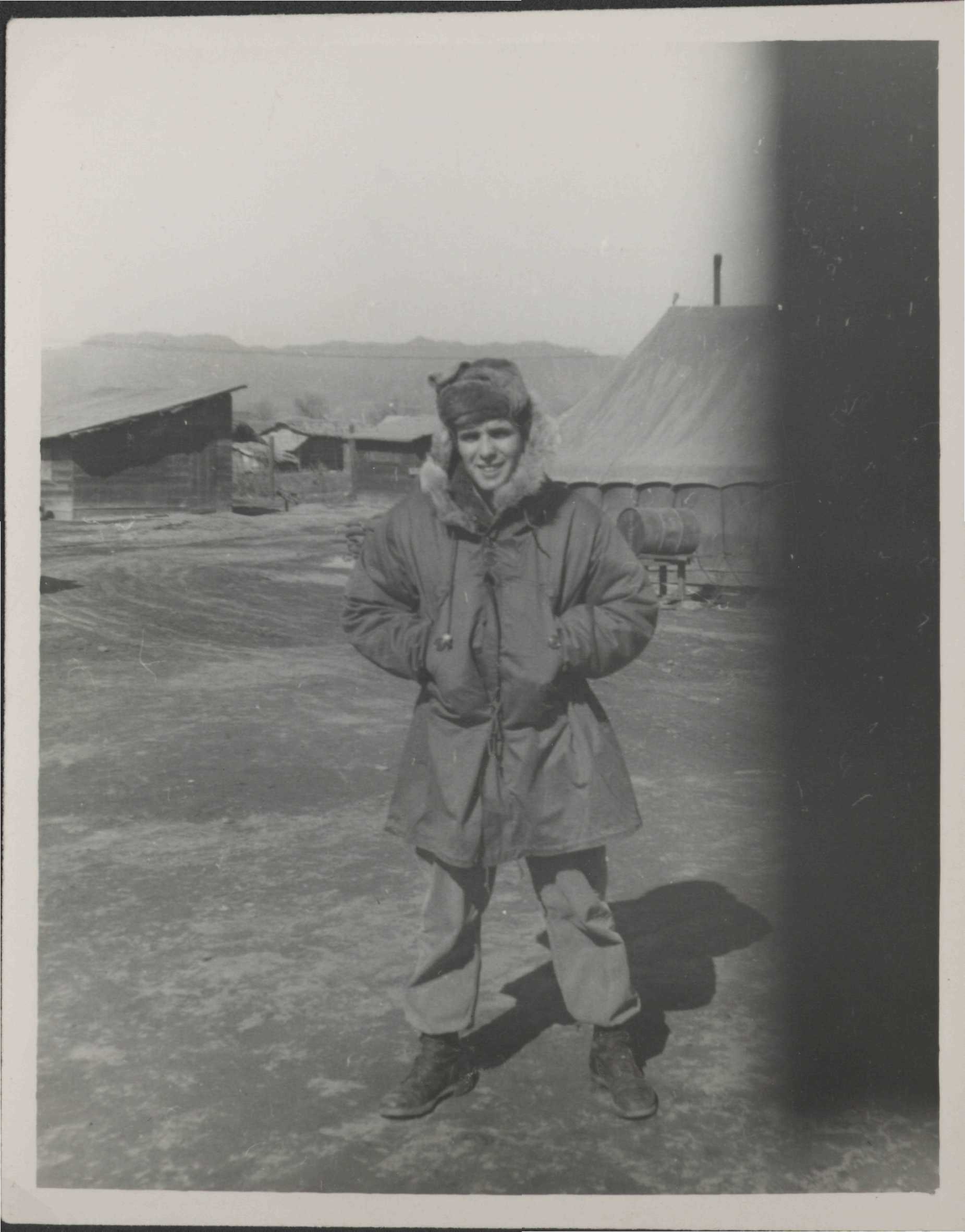
Joseph Calabria in Chunchon
Joseph Calabria in Chunchon
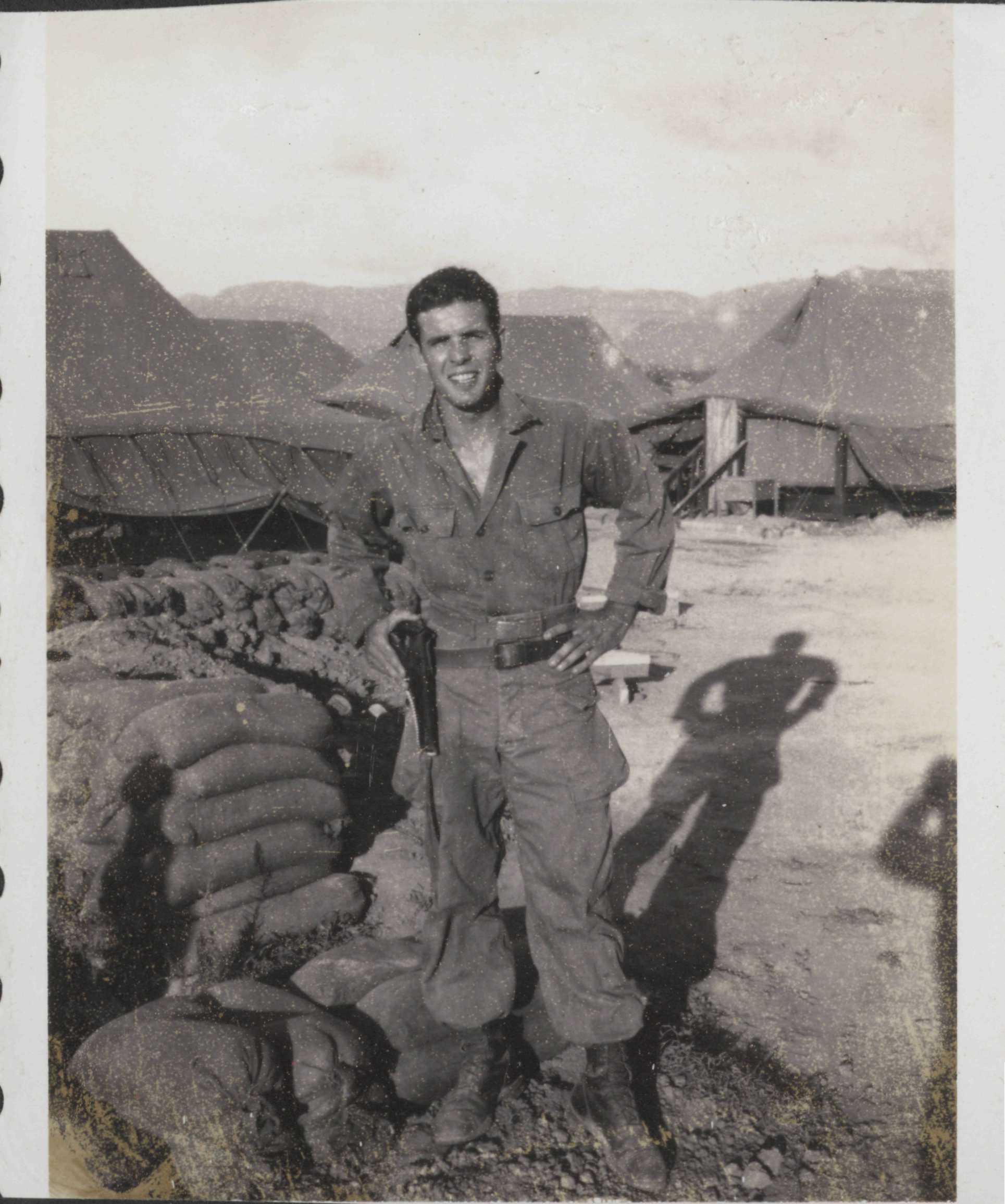
Joseph Calabria in Chunchon
Joseph Calabria in Chunchon
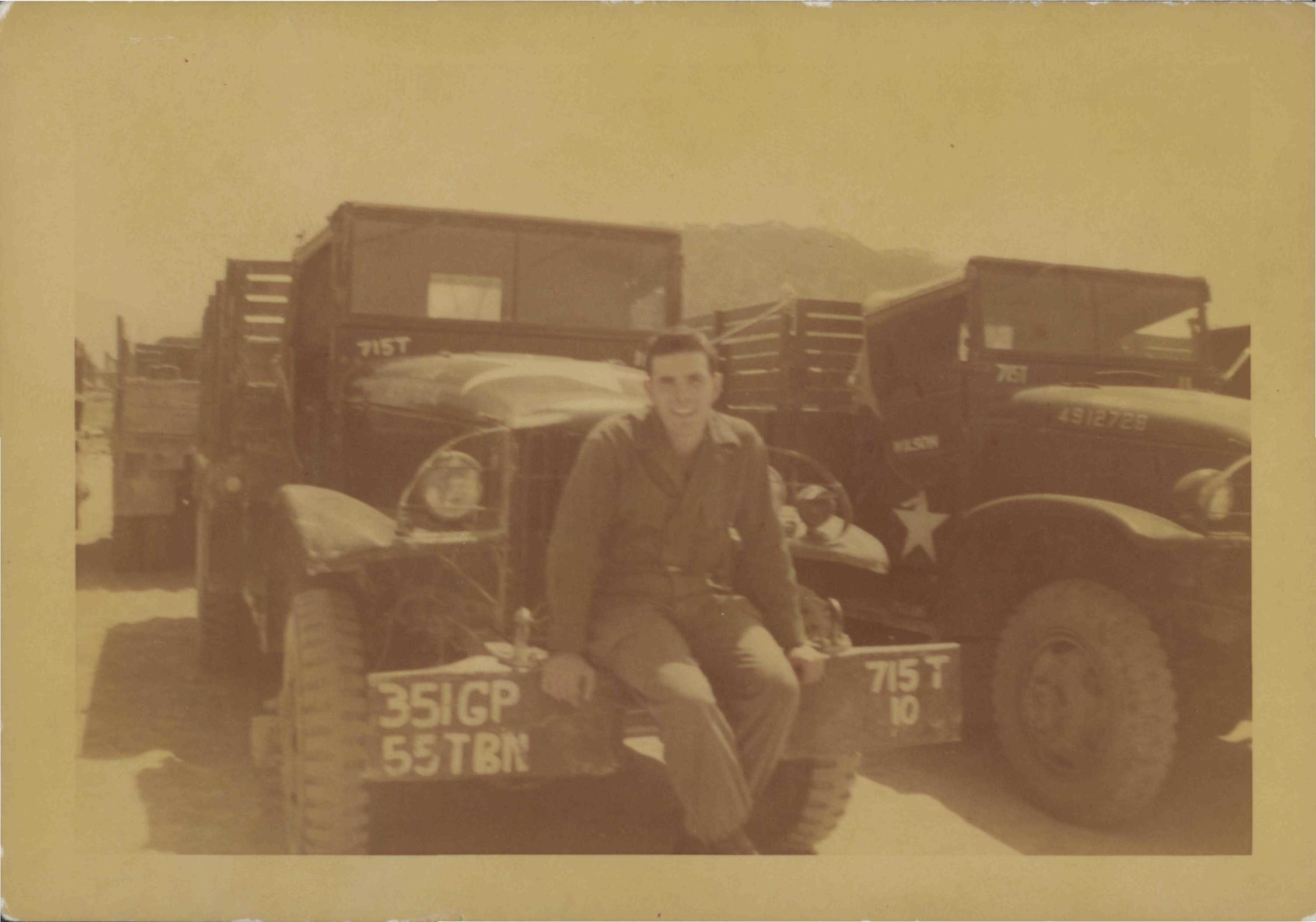
Joseph Calabria in Chunchon
Joseph Calabria in Chunchon
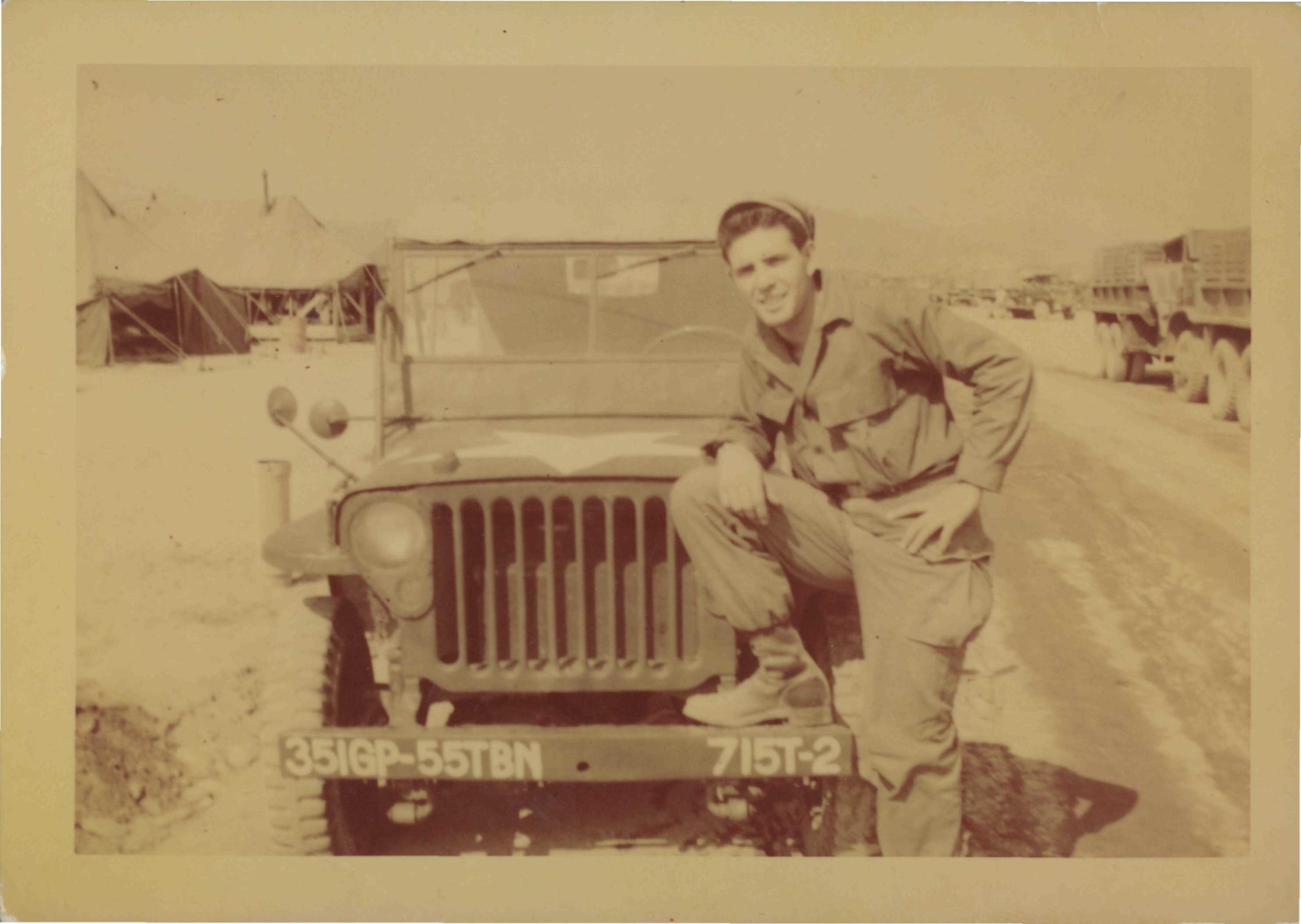
Joseph Calabria in Fort Dix, NJ
Joseph Calabria in Fort Dix, NJ
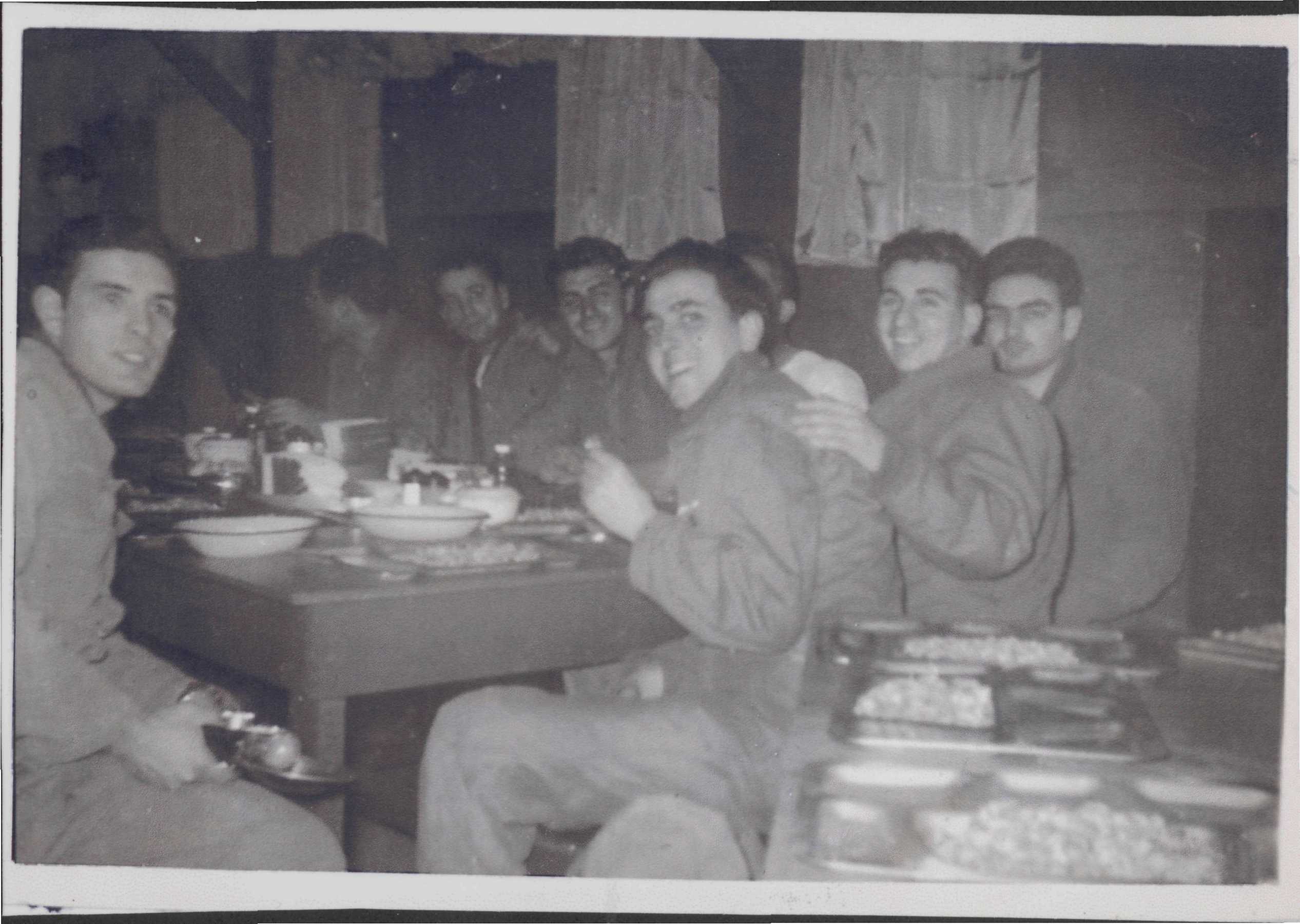
Joseph Calabria in Fort Dix, NJ
Joseph Calabria in Fort Dix, NJ
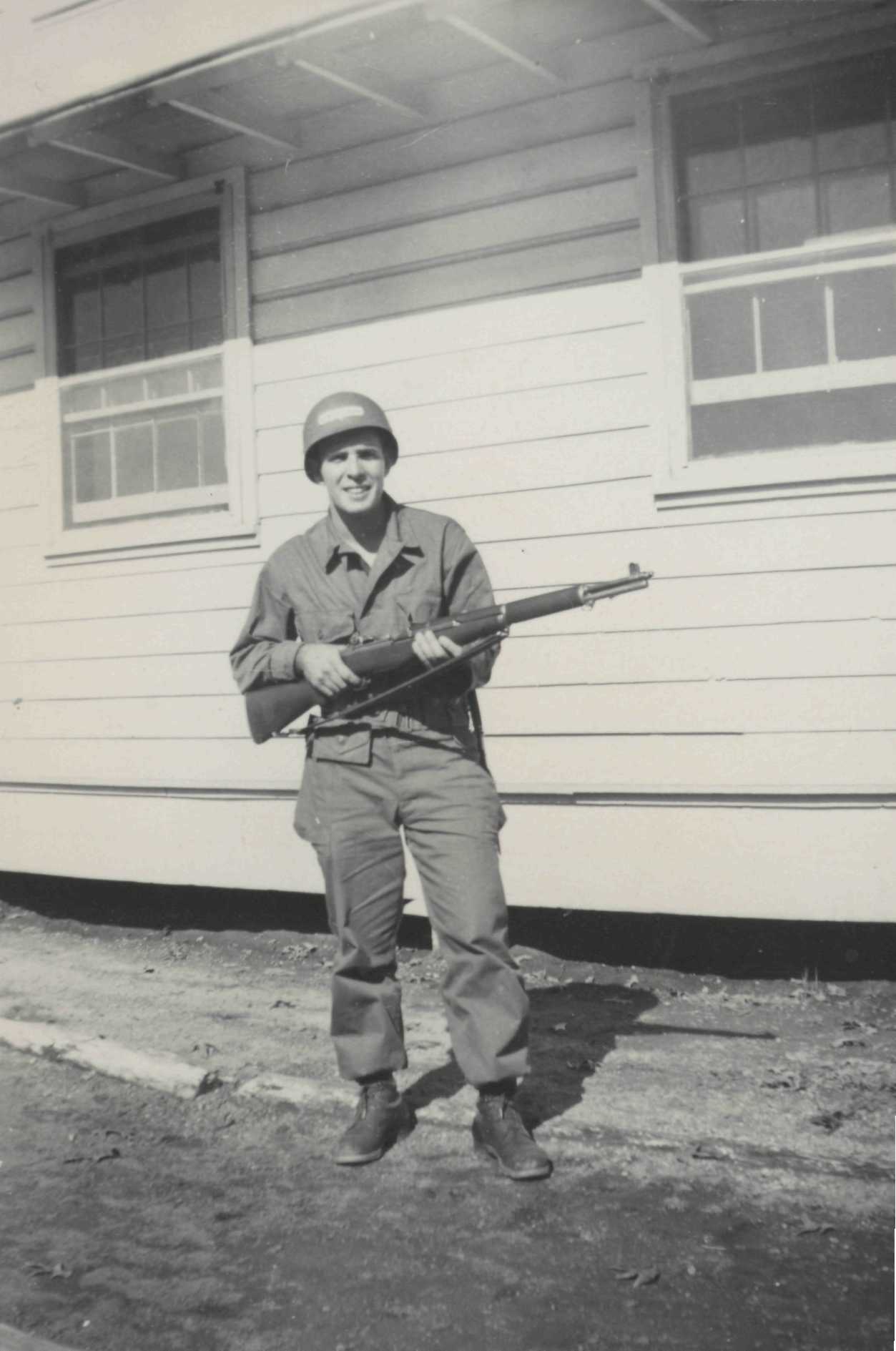
Joseph Calabria in Chunchon
Joseph Calabria in Chunchon