
Harold Griggs
This content was supplied by family and/or community members
Bio
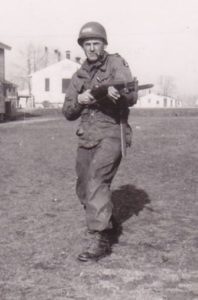
Harold W. Griggs was born on September 13, 1928 in Griggstown, KY. On November 10th, 1950 he was drafted into the United States Army and headed to basic training at Camp Breckinridge, Kentucky. In February 1951, he left for Korea by way of Seattle, Washington , Tokyo, Japan, and Sasebo, Japan. In May 1951, he faced his first battle. He was a Sergeant in the 9th Infantry Regiment Company A. He was assigned to 57 Recoilless Rifle squad as an ammunition bearer.
They were ordered to take a hill at all costs. One such hill proved costly. In the area of Tondul on September 29th 1953, an artillery or mortar fell within 3 feet of Harold. Harold was wounded in that blast, but his life was saved by another soldier who took most of the blast. Part of his foot was missing, and his left arm was broken and behind his back, but he was alive. 4 soldiers and 2 South Korean soldiers tried to help. He couldn’t walk even with their help, and there was no medic in sight. They had to hide in the bushes the rest of the night. At 7:30 AM, he was put on a litter, strapped to a tank, then to a jeep, then to a helicopter,, and flown to the hospital. There, they amputated his leg below the knee. He was awarded the Purple Heart while in the hospital in Korea. He was soon transferred to Tokyo General Hospital, then on to Hawaii. After that, he was transferred to California. He was then relieved to be told he would be sent to Fort Campbell, Kentucky, to the new amputee center, which was a couple of hours from his hometown of Benton, Kentucky. He arrived in Fort Campbell on October 17, 1951. They amputated more of his leg and rebroke his arm to put a pin in it and set it properly. When the doctor put the pin in, he left some gauze, which caused an infection that plagued him the rest of his life. Then in April of 1952, he got his new leg and started pulling duty. He was discharged from the hospital on March 31, 1953.
He had fond memories of the USO shows by Bob Hope and Rita Hayworth, who signed his cast when she visited him in the hospital in California. His other thoughts on the Korean War: “I would like to say here what I think of the Korean Conflict. I do believe that if the U.S. sends troops, it should be a declared war, and when we get there, we should be allowed to win the war, not just go to the Yalu River or the 38th parallel. I was not in the regular army. I was drafted to fight in a war, not a conflict. You can see I am a little bitter. I guess, if I had it to do again, I would say if you declare war, we’ll go, and if not, I won’t go.”
Despite the hardships he endured, Harold went on to lead an inspiring and meaningful life. While recovering at Fort Campbell, he became engaged to Mildred Johnston, whom he later married. Together, they raised five children and built a strong family foundation. Harold continued his service to the community as Postmaster of Calvert City, KY, and was active in his church. Above all, he is remembered as a devoted husband, father, grandfather, and cherished friend whose resilience and warmth touched countless lives.